cross-border e-commerce strategy for Hong Kong SMEs works when strategy, execution and measurement reinforce one another. This guide turns a real Hong Kong or regional learning engagement into an agency-ready framework that teams can apply.
Table of Contents
ToggleWhy this matters
Many companies treat going global as a media-buying exercise. The harder work is deciding which market to enter, what customer problem to own, how the offer should change and whether fulfilment can support the promise.
What informed this playbook
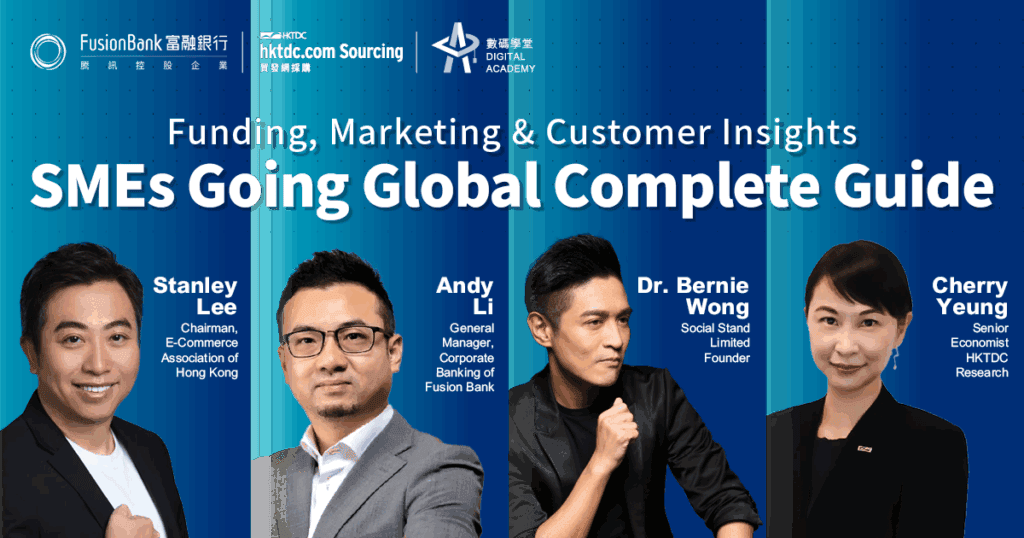
At an HKTDC Digital Academy session in 2025, Social Stand founder Dr Bernie Wong examined how SMEs can connect market selection, digital channels and operational readiness before investing in overseas growth. The event is context; the enduring value is the decision framework below.
A four-part implementation framework
Choose a beachhead market
Score markets by demand signals, competition, language, platform access, margins and delivery constraints. A focused launch creates cleaner learning than spreading budget across several countries.
Localise the value proposition
Translate the customer problem, proof points, pricing logic and objection handling—not only the words. Search behaviour and trust signals vary by market.
Build a measurable channel system
Connect search, social content, marketplaces, email and retargeting to one conversion path with agreed acquisition and revenue metrics.
Run a 90-day learning cycle
Test a small offer, review lead quality and contribution margin, then scale only the combinations that produce repeatable demand.
How an agency team applies it
At Social Stand, we translate the framework into a working brief: business objective, priority audience, message architecture, channel roles, content system, governance and measurement. The first deliverable should not be a long list of tactics. It should be a small set of decisions that a team can execute, review and improve.
A practical scorecard combines leading indicators—qualified attention, content saves, landing-page engagement and enquiries—with commercial outcomes such as lead quality, conversion, retention or operational efficiency. That keeps creative work connected to the business case.
Questions decision-makers should ask
- Which audience and business decision are we trying to influence?
- What evidence would make the message credible?
- Which channel has a clear job in the journey?
- What will we learn within the first 30 to 90 days?
From workshop insight to business action
For the event record and speaker perspective, see Dr Bernie Wong’s original engagement note. Explore the Social Stand AI and digital marketing resource hub for related guidance.
If your organisation is planning regional e-commerce or a go-global campaign, speak with Social Stand about strategy and corporate training. We can tailor the framework to your market, team and measurable objectives.
Frequently asked questions
Is this framework only for large organisations?
No. Smaller teams often benefit most from explicit priorities, a limited pilot and a shared measurement plan.
Should AI or a new platform come first?
No. Start with the customer or operational problem, then select technology and channels that support the required behaviour.
SOCIAL STAND BRIEFING
Practical AI & Digital Marketing Insights
Get useful ideas on AI, digital marketing, social media and brand storytelling for leaders and teams across Hong Kong and Asia.