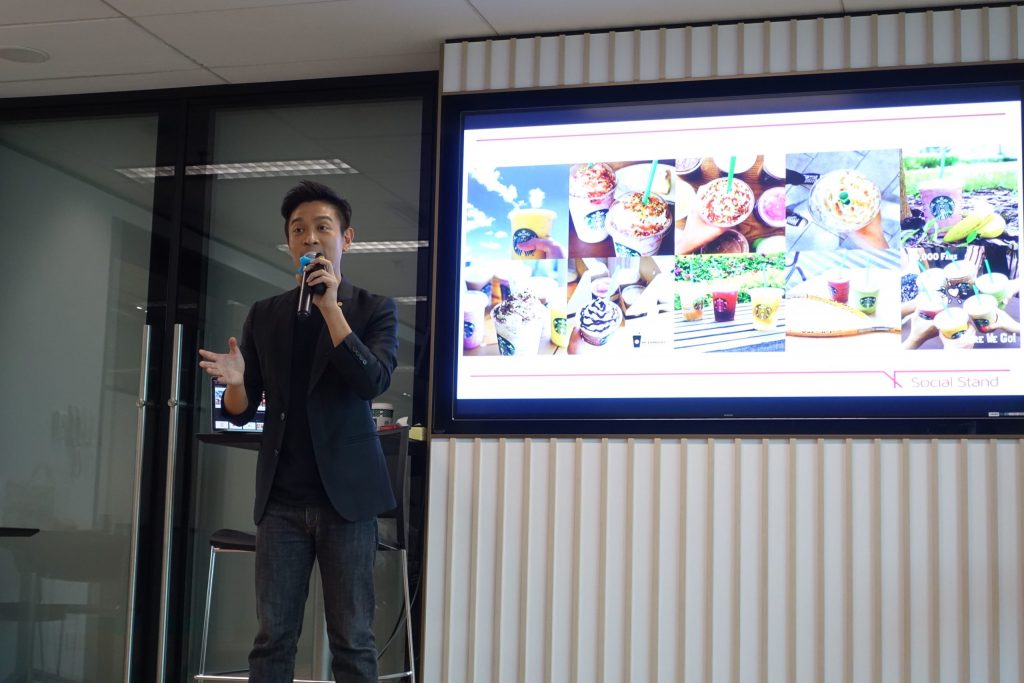
On 23 November 2019, Dr Bernie Wong, founder of Social Stand Limited, led a full-day brand storytelling workshop for marketers from the Advanced Diploma in Marketing and Retail Management at HKU SPACE. The programme, organised with Estée Lauder under the Retail Leadership Acceleration Program, centred on a principle that remains useful: marketing is not simply product promotion. It is the disciplined communication of a brand’s meaning through a recognisable persona, tone and voice.

Start with Brand DNA, not a campaign slogan
A strong story begins with a stable strategic core. Define why the brand exists, whom it serves, what tension it helps resolve and what evidence supports its promise. This “Brand DNA” prevents every campaign from sounding like a different company.
A practical statement can follow this structure: for a specific audience facing a recognisable problem, the brand provides a distinct outcome, supported by credible proof. It is an internal decision tool rather than customer-facing copy.
Turn strategy into a narrative
Useful brand stories contain four elements: a person or community with a goal, a meaningful obstacle, a point of change and evidence of progress. The customer should normally remain the protagonist; the brand plays the guide, enabler or trusted partner.
This approach works across corporate communications, social media, training, employer branding and sales. The format changes, but the underlying narrative remains consistent.
Build a repeatable content system
Translate the narrative into several recurring story pillars, such as customer transformation, expert guidance, behind-the-scenes process, community impact and product proof. Give each pillar a purpose, preferred formats, evidence requirements and call to action.
Then adapt one source story for different channels instead of producing disconnected posts: a long interview can become an article, short video, carousel, email and sales example. Repurposing should preserve the core claim while changing the depth and presentation for each audience context.
Protect credibility
Storytelling is not permission to exaggerate. Separate verified facts from interpretation, obtain permission for customer stories and disclose material partnerships. In an AI-assisted workflow, people should still verify claims, confidential information, brand voice and cultural nuance before publication.
Measure whether the story works
Match measurement to the story’s job. Awareness stories may be evaluated through qualified reach and recall; consideration stories through engaged visits and enquiries; conversion stories through leads or sales; trust stories through sentiment, advocacy and repeat engagement. Avoid treating every story as a direct-response advertisement.
A practical workshop exercise
- Write the audience’s real situation in one sentence.
- Name the obstacle without turning it into a product feature.
- Identify the change the audience wants.
- Add one verifiable proof point.
- Adapt the same narrative into a website paragraph, social post and short presentation opening.
For related frameworks, explore Social Stand’s AI, digital marketing and social media resources or discuss a customised corporate training programme in Hong Kong.